 Metamaskswap
Metamaskswap combines eligible same-network token sales into a stablecoin through Mobile Batch Sell
Metamaskswap supports converting up to five eligible tokens on the same network into one supported stablecoin through MetaMask Mobile Batch Sell. This mobile workflow is available in version 7.82.0 and later. Each token has its own sale amount, and the review screen shows estimated stablecoin proceeds and the network fee before confirmation. Tokens from different networks cannot share a batch, and real-world assets are excluded. One confirmation simplifies the interaction, while settlement can involve a single on-chain transaction or sequential swaps. Batch selling suits a shared stablecoin destination. Individual swaps provide separate control over each conversion, including its timing and destination asset.
In short: Batch Sell groups eligible same-network sales, and successful transaction records and corresponding stablecoin balance changes confirm the token amounts that produced the stablecoin proceeds.
Batch Sell and Individual Swaps
Batch Sell groups eligible sales around a common destination, while individual swaps configure each source token separately. Grouping reduces repeated review and confirmation interactions when several balances need the same receiving asset, while separate swaps accommodate different destination tokens or different sale timing and carry their own quotes and network fees. Compare the amounts being sold, the asset being received and the total cost of execution. A shorter confirmation flow alone does not establish a better exchange outcome, especially when different token amounts or receiving assets make the quotes unequal.
Keep the comparison on one network when judging the batching benefit. Moving proceeds elsewhere adds another operation with its own cost and compatibility requirements. Cross-network swaps serve that different destination need; their availability in MetaMask does not expand the mobile batch into a cross-network sale.
Same-Network Limits and Token Identity
Batch Sell supports Ethereum Mainnet, BNB Smart Chain, Base, Linea, Arbitrum and Polygon for the mobile flow described here. A batch can include up to five eligible source tokens. All selected balances must originate on the same network. Real-world assets, including tokenized stocks, fall outside this feature’s eligible inputs. Network support and asset eligibility are separate requirements. A token that appears elsewhere in the wallet can still be unsuitable for this particular sale method. Its appearance in an asset list does not establish that it has an executable trading route.
For contract-based tokens, identity also includes the contract on that network. A contract address identifies the contract that manages an asset’s balances; it is different from the account address that holds those balances. Match the intended token to its network and contract when similar names appear. A shared symbol cannot establish that two entries represent the same asset.
Which Stablecoin Can Receive the Proceeds?
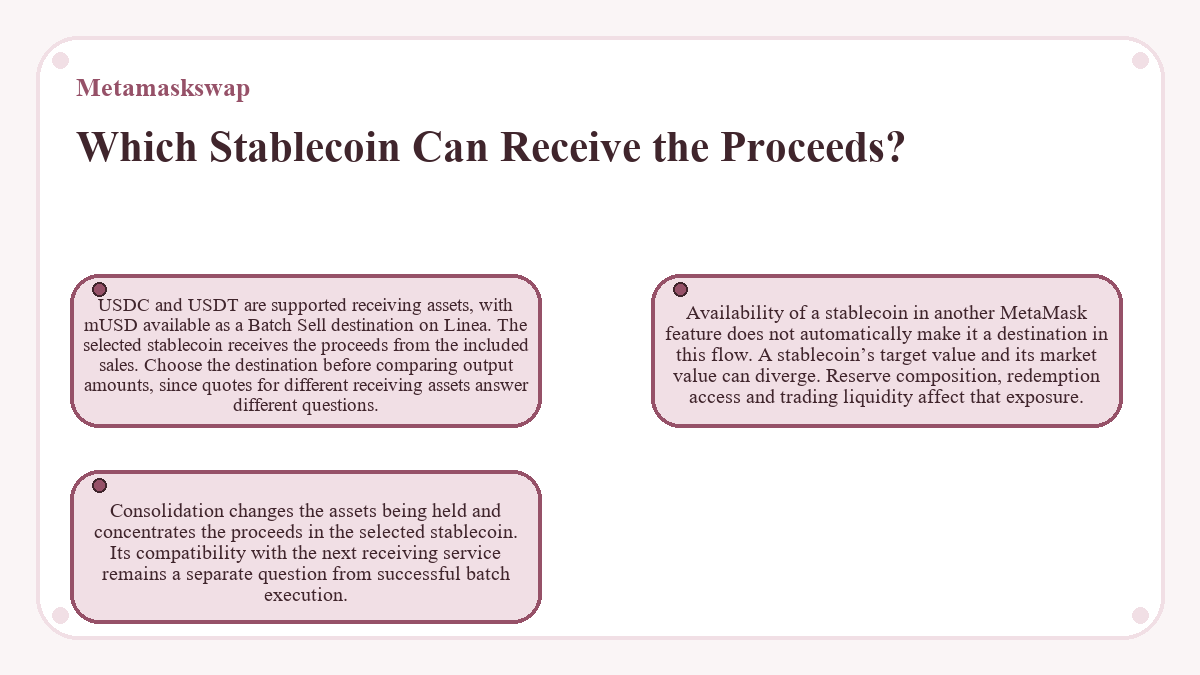
USDC and USDT are supported receiving assets, with mUSD available as a Batch Sell destination on Linea. The selected stablecoin receives the proceeds from the included sales. Choose the destination before comparing output amounts, since quotes for different receiving assets answer different questions. Availability of a stablecoin in another MetaMask feature does not automatically make it a destination in this flow.
A stablecoin’s target value and its market value can diverge. Reserve composition, redemption access and trading liquidity affect that exposure. Consolidation changes the assets being held and concentrates the proceeds in the selected stablecoin. Its compatibility with the next receiving service remains a separate question from successful batch execution.
Mobile Token Selection and Sale Amounts
MetaMask Mobile places Batch Sell under Trade, where selection begins with the desired supported network. Choose the eligible tokens, then set each sale amount using its slider. The amounts belong to individual tokens, so review each selection before choosing the receiving stablecoin. Selling a chosen amount need not mean disposing of every unit that the account holds.
Review amounts in their token units. A wallet’s fiat valuation expresses an estimated value and does not replace the quantity being sold. Partial sales leave the unsold quantity outside the intended exchange. Before proceeding, compare the selection with the balances that should remain afterward. The eventual stablecoin total alone will not reveal whether the correct amount of every source token was selected.
Quote Details Before Sell All
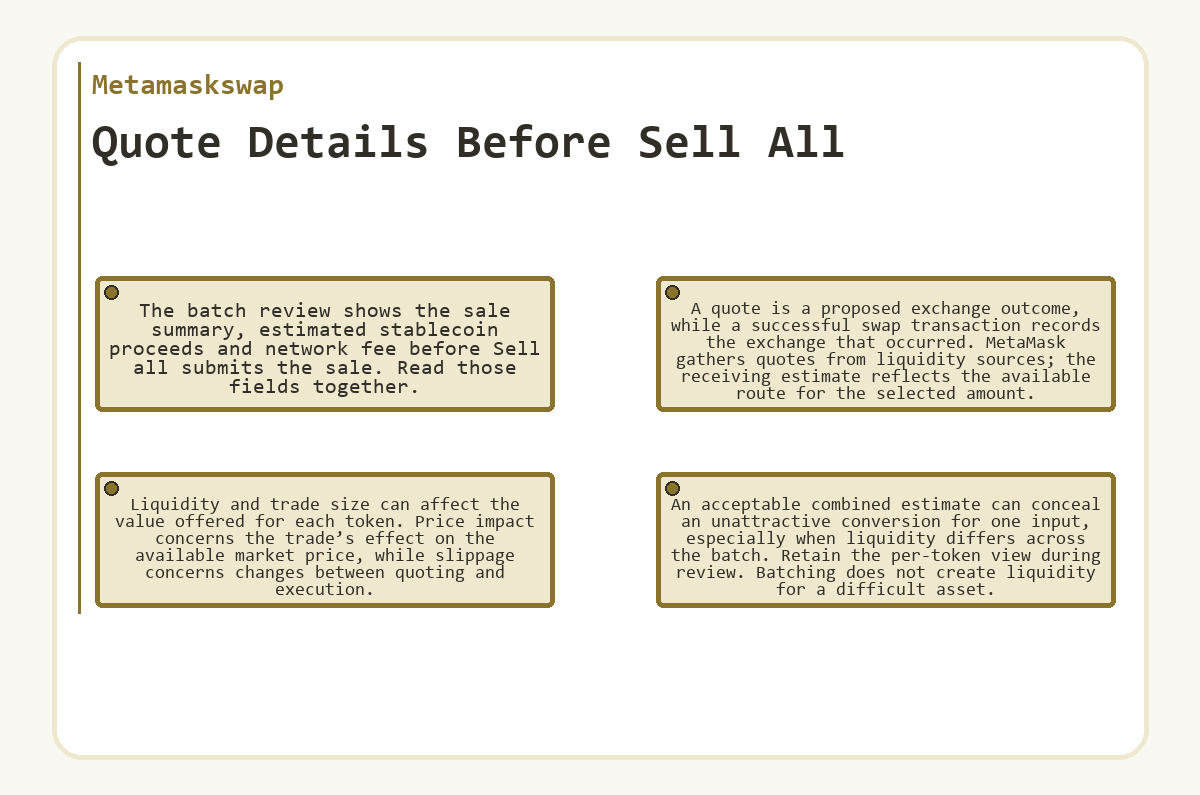
The batch review shows the sale summary, estimated stablecoin proceeds and network fee before Sell all submits the sale. Read those fields together. A quote is a proposed exchange outcome, while a successful swap transaction records the exchange that occurred. MetaMask gathers quotes from liquidity sources; the receiving estimate reflects the available route for the selected amount.
Liquidity and trade size can affect the value offered for each token. Price impact concerns the trade’s effect on the available market price, while slippage concerns changes between quoting and execution. An acceptable combined estimate can conceal an unattractive conversion for one input, especially when liquidity differs across the batch. Retain the per-token view during review. Batching does not create liquidity for a difficult asset.
What Happens When a Token Cannot Be Quoted?
Batch review flags tokens for which a quote or executable route cannot be obtained, allowing removal before confirmation. Review the remaining selection after removing a flagged token. The intended proceeds now concern fewer assets, so an earlier estimate for the full selection no longer describes the revised sale. Tokens need compatible trading support and available liquidity to produce usable quotes. A review-stage exclusion is distinct from a transaction that was submitted and subsequently failed on-chain; it does not establish that any sale has completed.
Swap Fees and Network Costs
Each included token sale carries the applicable MetaMask swap fee. Batch Sell does not add a separate fee for grouping the sales. Network fees are another cost category. They pay for blockchain execution, and their calculation depends on the network and the work that the transaction requires. Batching can reduce network cost per swap through shared execution, although the saving varies with network conditions. The number of selected tokens does not establish a fixed discount. Read the displayed fee details for the proposed sale instead of assuming that a shared confirmation makes every component free.
Compare token proceeds and network costs separately unless both have been valued in the same unit. Avoid deducting a fee twice.
A Batch Quote and Separate Quotes for the Same Sales
A reader wants to sell eligible same-network balances into one stablecoin and compares grouped selling with individual swaps. The balances, chosen amounts, quotes, fees and settlement results in this worked example are hypothetical. Both methods use identical source amounts, the same receiving stablecoin and the same network.
The reader first prepares a Batch Sell quote without confirming the sale. Its estimated stablecoin proceeds and network fee describe the grouped option.
The reader then checks individual swap quotes for those same amounts. They compare the combined estimated proceeds and the sum of the displayed network fees with the batch quote. Both fee totals use the same denomination, and each displayed fee is counted once.
Assume equal estimated stablecoin proceeds and a lower total network fee for the batch. The reader chooses grouped selling. In this case, completed transaction records show the selected sales and the expected stablecoin credit, with the actual network fee below the comparison total. The choice applies to these amounts and fees; changed quotes require another comparison.
How Can You Confirm That the Sales Have Settled?
Successful transaction records and the corresponding stablecoin balance changes establish that the selected sales have settled. A confirmation tap or pending activity entry alone establishes an earlier stage. Open the relevant activity details and inspect the records on the selected network’s block explorer, then compare outgoing token quantities with the intended sale amounts and incoming stablecoin transfers with the account’s balance change. An existing stablecoin balance makes the increase more informative than the final total.
A missing wallet display and a missing on-chain receipt are different problems. Token display can require importing the asset, while an explorer can show balances independently of that display. Where execution involves several records, check their individual status before treating the whole selection as complete. A receipt for one transaction cannot describe a separate transaction that remains pending.
EIP-7702 and Sequential Execution
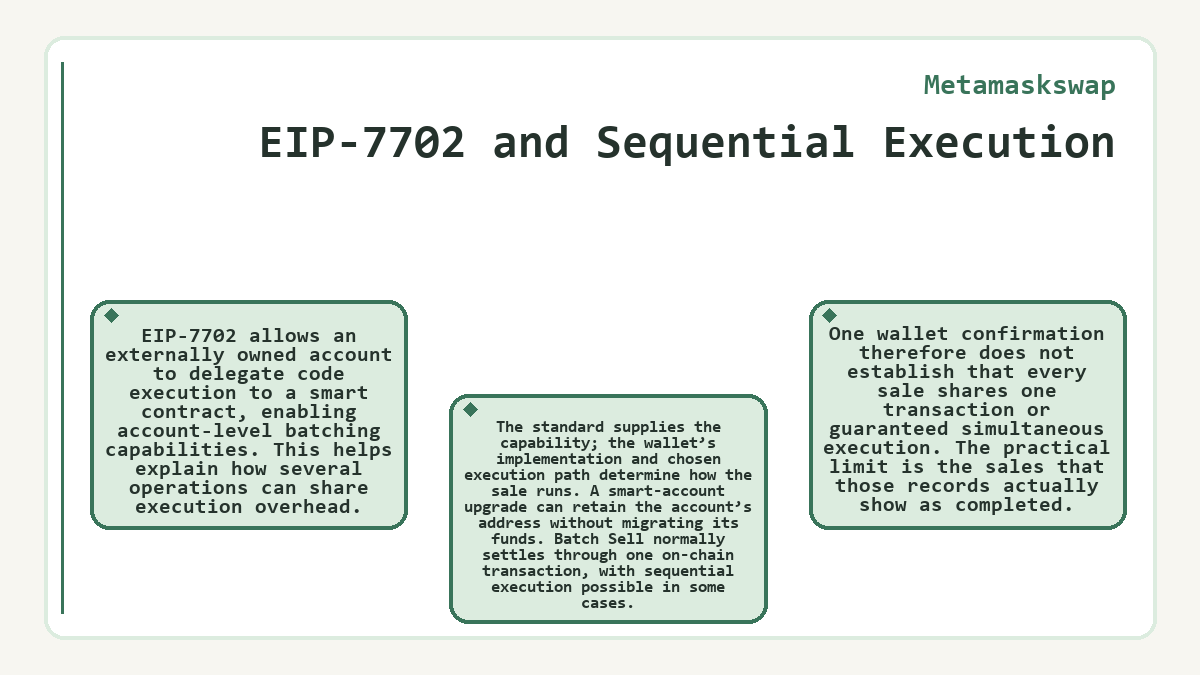
EIP-7702 allows an externally owned account to delegate code execution to a smart contract, enabling account-level batching capabilities. This helps explain how several operations can share execution overhead. The standard supplies the capability; the wallet’s implementation and chosen execution path determine how the sale runs. A smart-account upgrade can retain the account’s address without migrating its funds.
Batch Sell normally settles through one on-chain transaction, with sequential execution possible in some cases. One wallet confirmation therefore does not establish that every sale shares one transaction or guaranteed simultaneous execution. The practical limit is the sales that those records actually show as completed.
Metamaskswap: quick answers
Does Batch Sell Deposit the Proceeds Into a Bank Account?
Batch Sell returns a supported stablecoin to a blockchain account rather than making a bank payout. Selling crypto for fiat uses a separate provider-based flow. Its availability depends on the region, supported asset and payment method. Receiving stablecoins through a batch does not establish eligibility for a later cash withdrawal.
Can Importing a Token Make It Eligible for Batch Sell?
Importing a token changes its display in MetaMask and does not create trading liquidity. Batch Sell still requires an eligible asset on a supported network and a usable quote. A contract address identifies the asset being imported, but identifying it correctly does not establish that a liquidity source can execute its sale.
Are Network Fees Returned If a Submitted Batch Transaction Fails?
A transaction that fails during on-chain execution can still consume gas, so its network fee is not automatically returned. This differs from a token rejected during quote review before submission. For sequential execution, distinguish any failed transaction from separate successful sales when assessing the remaining balances.
Who Can See the Token Sales in a Batch Sell?
On public blockchain networks, anyone can inspect transaction records using an account address or transaction identifier. Grouping sales does not conceal the token transfers or resulting stablecoin receipt. An account’s activity remains viewable on its network’s explorer, so batch execution should not be treated as a privacy feature.
Which Details Belong in a Batch Sell Transaction Record?
Keep the selling account, network, transaction identifiers, source-token quantities, stablecoin receipts and actual network fees. Sequential execution may produce several relevant records. Recording each sale preserves details that a combined stablecoin balance cannot show, including which input quantities were exchanged and which transactions completed. Keep the original estimate separate from settled amounts so a grouped display does not hide differences between quoted and received proceeds.
Last updated -